The first time you hear a lion roar in the dark, you understand what safari really means. Not the khaki, not the open vehicle, not the binoculars. The sound comes from somewhere you cannot see, at a distance you cannot judge, and for a moment the bush is not a backdrop. It is where you are.
If you are planning your first African safari experience and trying to understand what it actually involves, this guide explains it plainly. No jargon. Just what a bush safari is, what happens during one, and how to choose the version that suits you.
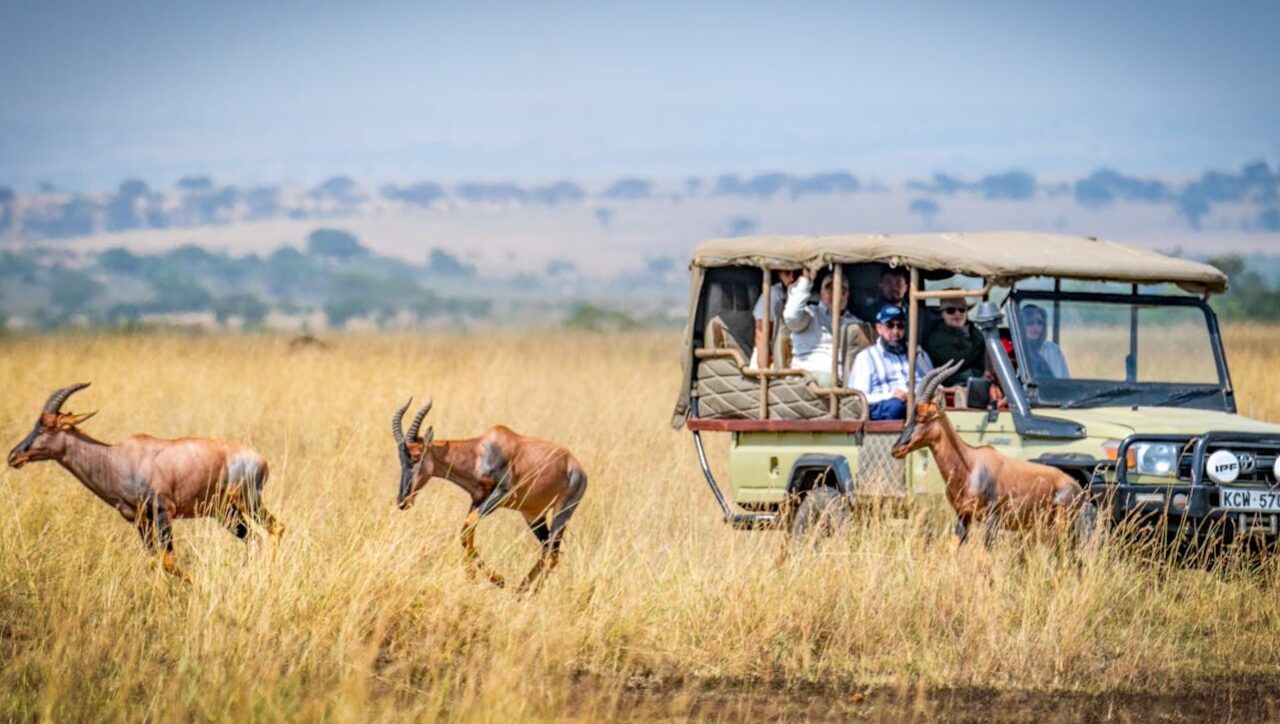
What is a bush safari? A bush safari is a guided journey through the African wilderness, typically involving game drives in open-sided vehicles to observe free-roaming wildlife in national parks or private conservancies. Activities include morning and afternoon game drives, walking safaris, night drives, and cultural visits. The core experience is watching animals in their natural habitat with a trained local guide.
Q: What does “going on safari” mean?
A: Going on safari means travelling to a protected wildlife area (national park, reserve, or conservancy) to observe wild animals in their natural habitat, guided by an expert local guide. It typically involves staying at a safari lodge or tented camp and taking daily game drives in an open-topped 4×4 vehicle.
What actually happens on a bush safari
The structure of a typical safari day is different from any other type of travel. Understanding the rhythm beforehand helps enormously on arrival.
The morning game drive
Most safaris start before sunrise. You are woken at 5:30 or 6am, given coffee and a light snack, and head out by 6am when the air is cold and the animals are most active. Lions and cheetahs hunt in the early morning. Elephants move between water and grazing grounds. Leopards are visible before they retreat to shade.
The morning drive lasts 3-4 hours. Your guide reads tracks, listens to bird calls, and positions the vehicle for the best sightings. You stop whenever there is something worth seeing, which is frequently. The drive ends between 9:30 and 10:30am when the heat of the day slows animal movement.
The midday break
After the morning drive, you return to camp for a full breakfast. The middle of the day at most camps includes time to rest, swim if the lodge has a pool, or talk to your guide about what you saw. This is not dead time. It is part of the rhythm. The bush in midday heat is largely quiet.
The afternoon drive
The afternoon drive departs around 3:30-4pm and runs until sunset or shortly after. This is when predators become active again, buffalo herds move to water, and the light shifts to the warm golds and reds that make wildlife photography extraordinary. Drives in private conservancies often continue after dark for night game drives.
Evening at camp
Dinner at most safari camps is served communally or at a shared table. The day ends with guides and guests talking over what was seen. In tented camps you fall asleep to the sounds of the bush outside, which is disorienting and wonderful. Hippos splash. Hyenas call. If you are very lucky, a lion roars close enough to vibrate the air.
Quick summary: A safari day includes two game drives: morning (6-10am, best for predators) and afternoon (3:30 to sunset, best for golden-hour photography). Rest and meals fill the midday break. Night drives available in private conservancies.
Types of bush safari: which one is right for you?
Not all African safari experiences are the same. The type of safari you choose shapes everything from what wildlife you can approach to how much you spend.
For a first safari, vehicle game drives are the right starting point. They are the most efficient way to see wildlife, the most comfortable, and the most guided. Walking safaris and night drives can be added once you understand the rhythm of the bush and feel comfortable in it.
Q: What is the difference between a game drive and a walking safari?
A: A game drive takes place in an open 4×4 vehicle, covering large distances to find and observe wildlife. A walking safari takes place on foot with an armed guide, covering shorter distances with more focus on tracking signs, plants, insects, and smaller creatures. Walking safaris offer a more immersive sensory experience; game drives offer better coverage and are safer for encountering large animals.
What wildlife can you see on a bush safari in Kenya?
Kenya’s wildlife portfolio is one of the most diverse of any safari destination. The headline species are the Big Five, the term originally used by hunters for the five most dangerous animals to hunt on foot: lion, leopard, elephant, buffalo, and rhino. Today it is used as a shorthand for the most sought-after sightings on any African safari experience.
A note on expectations: wildlife sightings are never guaranteed on safari. A guide can tell you where a lion was seen yesterday but cannot promise it will be there tomorrow. What experienced operators can do is position you in the right places at the right times to maximise the chances. This uncertainty is part of what makes the African safari experience genuine, and different from a zoo.
Q: Will I see the Big Five on a Kenya safari?
A: It depends on where you go and how long you stay. The Maasai Mara consistently delivers lion, leopard, elephant, and buffalo sightings. Rhino is less common in the main reserve but highly reliable in Laikipia, Ol Pejeta, and Lake Nakuru. With 4-5 days across two parks, completing the Big Five is achievable but not guaranteed.
Why safari matters
Beyond the thrill of seeing a lion hunt or a herd of elephants cross an open plain, every safari you take with a responsible operator supports conservation and local communities. Your visit directly funds anti-poaching patrols, habitat protection, and community development in the areas you travel through. No two days on safari are ever the same – that unpredictability is part of the magic, and knowing your trip makes a difference adds another layer to the experience.
Trying to decide what kind of safari is right for you? We plan first-time and return safaris across Kenya and will match the experience to what you are looking for. Message us on WhatsApp or request a free itinerary at katulusafari.com/contact.
Where do you stay on a bush safari?
Accommodation on safari ranges from basic to extraordinary. The categories below give a clear sense of what to expect at each level.
Tented camps
The classic East Africa safari accommodation. Large canvas tents on permanent raised platforms with proper beds, en-suite bathrooms, electricity, and sometimes outdoor showers. Not camping in any roughing-it sense. The canvas walls mean you hear the bush at night, which is as much a feature as anything else. Good tented camps are among the most atmospheric places to stay in Africa.
Safari lodges
Permanent structures (stone, thatch, wood) with the full amenities of a hotel: restaurant, bar, pool, and wi-fi in public areas. Comfortable and reliable. Some lodges are positioned on viewpoints above watering holes or rivers, meaning what happens on safari continues from your deck or dining room between drives.
Luxury tented camps
The highest tier. Private plunge pools, butler service, gourmet food, and tents that cost more per night than a five-star city hotel. Angama Mara in the Maasai Mara and similar properties in the Mara conservancies. These are extraordinary places for special occasions or travellers for whom the accommodation is part of the experience.
Budget camps
Basic tents, shared facilities, group game drives, and significantly lower prices. Entirely viable for fit, flexible travellers. The wildlife is identical to what guests at expensive lodges see. The difference is comfort and exclusivity, not what happens on safari itself.
Common mistakes first-time safari travellers make
Mistake 1: Wearing bright colours
Khaki, olive, beige, and grey are the colours of a safari wardrobe for a reason. Bright colours stand out to wildlife and can cause animals to move away from the vehicle. This is one of the small rules that genuinely affects sightings.
Mistake 2: Making noise during game drives
Many travellers are surprised by how quiet experienced safari-goers are around animals. Sound travels. A loud conversation when a leopard is visible in a tree is enough to cause it to move away. Your guide will give you cues. When they are quiet, be quiet.
Mistake 3: Standing up suddenly in the vehicle
Animals in the Maasai Mara have generally become habituated to safari vehicles, treating them like large neutral objects. Standing up suddenly changes the silhouette. Lions and other predators may move away, or in some cases pay more attention to the vehicle. Stay low and move slowly.
Mistake 4: Underestimating cold mornings
The Maasai Mara sits at roughly 1,500 metres elevation. June, July, and August mornings can be extremely cold at 6am, sometimes dropping close to freezing. Pack a warm fleece, a hat, and gloves for early drives. The temperature rises quickly, but the first hour can be bitterly cold without preparation.
Mistake 5: Only booking game drives
If your camp or conservancy offers a walking safari, do it. Even a two-hour guided walk changes your understanding of the bush entirely. You stop to look at dung beetles, track a lion’s prints, smell a particular tree. It is a completely different sensory experience from the vehicle, and it is often the thing travellers talk about most on their return.
Key takeaways
- A bush safari is a guided journey through African wilderness to observe free-roaming wildlife, typically from an open 4×4 vehicle
- A typical safari day involves two game drives: one early morning (6-10am) and one late afternoon (3:30 to sunset)
- Vehicle game drives are the most efficient and accessible safari type; walking safaris and night drives offer a deeper African safari experience
- The Big Five (lion, leopard, elephant, buffalo, rhino) are the headline species; Kenya also offers cheetah, giraffe, wild dog, and rare northern species
- Accommodation ranges from basic budget camps to luxury tented camps; the wildlife experience is broadly the same at all levels
- Private conservancies in Kenya allow activities not permitted in national parks: off-road driving, night drives, and walking safaris
- Wear neutral colours, stay quiet around animals, pack warm layers for early morning drives
Specific park rules and permitted activities vary by reserve and conservancy. Always confirm with your operator before travel.
Planning your first bush safari in Kenya?
Katulu Africa Safaris plans and guides safaris across Kenya. We explain every part of the African safari experience before you arrive so nothing surprises you, and we build itineraries around what you actually want to see rather than what is easiest to sell.
Request your free itinerary: katulusafari.com/contact or message us on WhatsApp. We typically reply within a few hours.
Frequently asked questions about bush safaris
Q: What is a bush safari?
A: A bush safari is a guided wildlife journey in African national parks or private conservancies, typically involving game drives in open-topped 4×4 vehicles. The goal is to observe free-roaming animals in their natural habitat with a trained local guide. Kenya and Tanzania are among the world’s best bush safari destinations.
Q: How long should a first safari be?
A: A minimum of 4-5 nights allows enough game drives to see major species and feel the rhythm of the bush. Shorter trips (2-3 nights) are possible but can feel rushed. Most first-time travellers who spend at least 5 nights on safari find they wish they had stayed longer.
Q: Is a bush safari safe?
A: Yes, when conducted with a licensed, reputable operator and a trained guide. Wild animals are unpredictable, but the rules of safari (stay in the vehicle, follow your guide’s instructions, do not feed animals) are designed to keep guests safe. Incidents are rare. Kenya’s major safari parks are well-managed with trained ranger staff.
Q: What should I pack for a bush safari?
A: Neutral-coloured clothing (khaki, olive, beige), warm layers for morning drives, a hat and sunscreen, binoculars, a camera with extra batteries, and insect repellent. Leave bright colours at home. Keep luggage light if using charter flights between parks, as weight limits are typically 15kg per person.
Q: Do I need to be fit for a safari?
A: Game drives require minimal fitness. Walking safaris involve 2-5 hours on foot over uneven ground and require reasonable fitness. Most tented camps and lodges are accessible to older travellers and those with limited mobility. Check with your operator about specific terrain and accessibility at your chosen camp.
Q: What is the difference between a national park and a private conservancy?
A: National parks are government-managed public land with rules including staying on tracks, no night drives, no off-road driving. Private conservancies are community or privately owned and permit off-road driving, night drives, and walking safaris. Conservancies typically have fewer vehicles per sighting and a more exclusive feel.