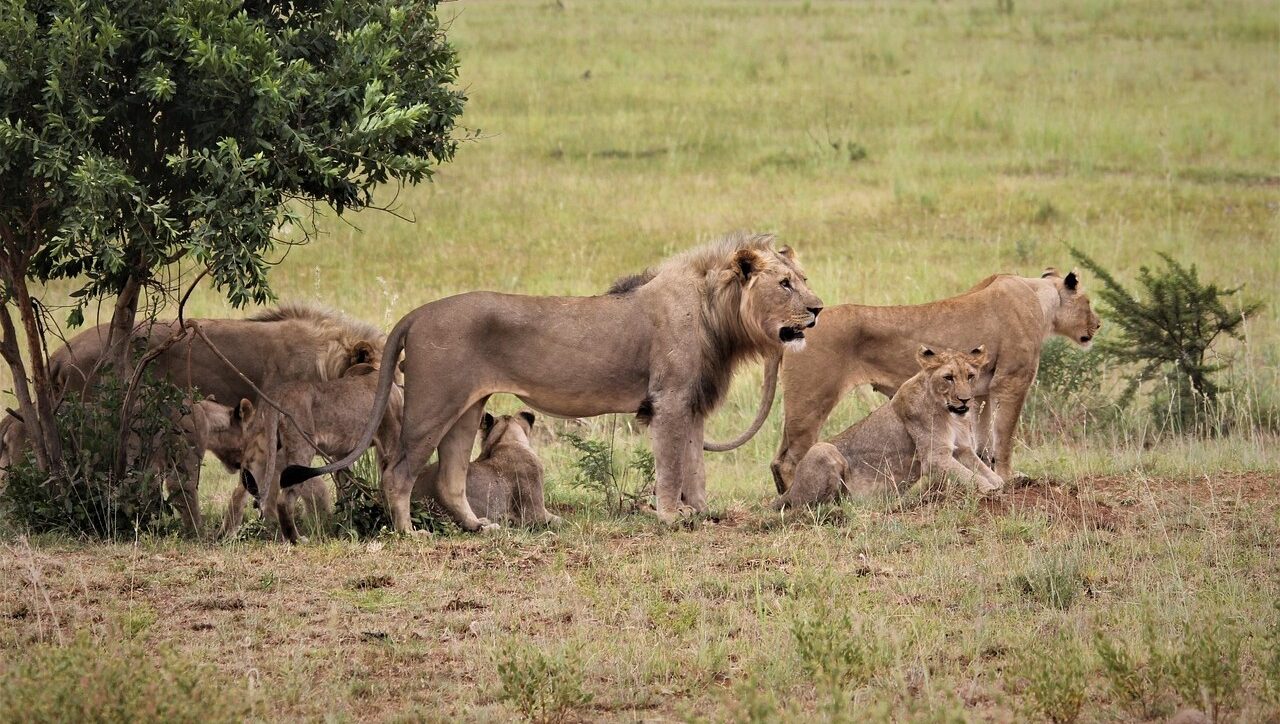
Kenya’s safari areas are among the safest wildlife destinations in Africa. Most safaris are straightforward, enjoyable experiences when these basics are followed. The parks are well-managed, the guides are trained, and thousands of first-time visitors travel through the Maasai Mara, Amboseli, and Samburu every year without incident.
Safety on safari is not a complicated subject, but it does require understanding a small number of rules that genuinely matter. What follows is what experienced Kenya guides actually tell their guests before the first game drive.
Quick summary: Kenya safaris are very safe when you follow your guide, stay in the vehicle during game drives, and follow basic health precautions (malaria prevention, vaccinations, travel insurance with medical evacuation cover). The vast majority of incidents happen when travellers do not follow these rules.
The Essential Rule:
Most safety issues on safari happen when travellers ignore the rules, not because the rules failed. Listen to your guide. Stay in the vehicle unless instructed otherwise. Do not approach or feed wildlife. The rest is preparation and common sense.
Who needs to read this?
First-time safari travellers need all 12 tips. Returning visitors know most of this but should still read Tips 8-12 (health precautions, personal security in cities). Travellers with children should pay particular attention to Tips 3, 4, and 9. Solo travellers and women travelling alone should read Tips 11 and 12.
Tip 1: Always follow your guide’s instructions
Your guide knows the animals, the terrain, and the protocols. This is not a job title. In Kenya, licensed safari guides have completed formal training, passed exams, and hold certification from the Kenya Wildlife Service. The instructions they give before and during drives have specific reasons behind them.
When a guide tells you to stay quiet, stay in the vehicle, or not to open the vehicle door, they are working from real experience with the specific animals and behaviours of that reserve. The tourists who have incidents on safari are almost always those who did not listen.
Tip 2: Stay in the vehicle at all times during game drives
Animals in Kenya’s major parks have become largely habituated to safari vehicles. They treat the vehicle as a large, neutral object that is not a threat. The moment a human stands above the roofline or steps out, the human silhouette changes entirely. Animals recognise a person as something different from the vehicle.
The rule is simple: stay in the vehicle unless your guide explicitly tells you it is safe to get out. At designated picnic sites and viewpoints, getting out is permitted. In the presence of large wildlife, it is not. Do not test this with elephants or buffalo, both of which can charge and are considerably faster than they appear.
Tip 3: Never attempt to feed or touch wildlife
This feels obvious until a monkey runs into camp and sits directly in front of you, or a giraffe approaches the vehicle close enough to touch. The instinct to reach out is immediate and strong. Do not act on it.
Feeding wildlife changes their behaviour toward humans in ways that create problems for every subsequent visitor. Animals that associate humans with food become aggressive around camps and vehicles. In some reserves, animals that have become food-habituated are destroyed because they pose a danger. The experience may feel harmless in the moment; the consequences are not.
Tip 4: Keep tent and vehicle doors zipped and closed
At safari camps, animals move through at night. Baboons, warthogs, and in some camps elephants and hippos pass by accommodation. Tented camps in particular are not sealed structures. An unzipped tent entrance is an invitation.
Zip your tent every time you leave it, and every time you return to it at night. Do not leave food or food wrappers inside your tent. The guides will tell you to look where you step on the path between your tent and the communal area at night. Take a torch. Some camps have nocturnal visitors that include smaller but unpleasant surprises: spiders, scorpions, and snakes do not seek you out, but they do enter spaces that are left open.
Q: Is it safe to sleep in a tented camp on safari?
A: Yes, when the tent is properly zipped. Tented camps are designed with wildlife in mind. Camp staff monitor animal movements around accommodation throughout the night. Do not leave food inside your tent, keep the zip closed whenever you are inside or outside, and use an escort if moving between your tent and common areas after dark.
Tip 5: Do not walk around camp alone at night
Almost all safari camps have a policy of escorting guests between accommodation and the main areas after dark. This is not theatrical. Hippos graze on camp lawns after sunset; elephants pass through; lions occasionally walk through unfenced camps. A camp escort is familiar with which animals are in the vicinity that night. A solo walk between your tent and the dining area is not.
If you need to leave your tent after lights out, use a torch, make noise as you move, and alert camp staff. They are there for exactly this. It is not an inconvenience to them; it is part of what they do.
Tip 6: Use a licensed operator and a certified guide
The Kenya Wildlife Service licenses professional safari guides. KWS-certified guides have passed training in wildlife behaviour, first aid, and vehicle operation. The difference in experience between a licensed guide and an unlicensed driver repurposed as a guide is significant and real.
When booking a Kenya safari, ask whether guides are KWS-licensed. Reputable operators use only licensed and experienced guides. Unlicensed operators exist and typically offer significantly lower prices. The trade-off is real and not worth taking on a first trip.
Tip 7: Check your travel insurance covers medical evacuation
Nairobi has good hospitals, including the Aga Khan University Hospital and Nairobi Hospital. Safari areas do not. If something serious happens in the Maasai Mara, the nearest comprehensive medical facility is in Nairobi, reached by charter aircraft. Medical evacuation from a remote safari location costs several thousand dollars and is not covered by basic travel policies.
Check your travel insurance policy specifically for medical evacuation cover before travel. Most specialist travel insurance policies include it; most general travel policies do not. This is the most important insurance clause for remote safari travel.
Questions about health precautions for a specific itinerary? Our team can advise on malaria prophylaxis, vaccinations, and medical considerations for any Kenya safari we plan. Message us on WhatsApp or at katulusafari.com/contact.
Tip 8: Take malaria prevention seriously
Malaria is present in most Kenya safari areas. It is a manageable risk, not a deterrent to travel, but it requires action before departure.
Consult your GP or a travel health clinic at least 6 weeks before travel. They will advise on which prophylactic medication is appropriate for your itinerary, your medical history, and the specific malaria strains in your destination. Options include atovaquone-proguanil (Malarone), doxycycline, and mefloquine. Your doctor will know which is right for you.
In addition to medication: wear long sleeves and trousers after dark, use DEET-based insect repellent on exposed skin, and sleep under a mosquito net where your camp provides one. These measures are standard protocol for all experienced East Africa travellers.
Tip 9: Get the right vaccinations before you go
Check with your GP or travel clinic at least 6-8 weeks before departure. Standard recommendations for Kenya include hepatitis A, typhoid, and tetanus. Yellow fever vaccination is required if arriving from an endemic country, and may be required if you are also visiting Tanzania.
For travellers planning activities involving animals at close range, rabies vaccination is worth discussing with your doctor. Meningitis vaccine is sometimes recommended for travellers to northern Kenya. None of these is unusual; the travel clinic will have the full list for your specific itinerary.
- Required: Yellow fever (if arriving from endemic country)
- Strongly recommended: Hepatitis A and B, typhoid
- Discuss with your doctor: malaria prophylaxis, rabies, meningitis, tetanus booster
Tip 10: Drink safe water
Tap water in Kenya is not reliably safe to drink in all safari areas. All reputable camps and lodges provide filtered or bottled water. Drink only what your camp provides and use bottled or filtered water for brushing teeth in areas where the local supply is uncertain.
Most travellers visiting established safari lodges have no issue because quality operations treat their water supply. Be more careful in locally run budget camps or when buying drinks in small towns during road transfers between parks.
Tip 11: Practise standard urban safety in Nairobi
The vast majority of Kenya safari travellers pass through Nairobi without incident. The city has a reputation that is partly deserved and partly outdated. The areas tourists use (hotels in Westlands, Karen, and Gigiri; the airport corridor; safari departure points at Wilson Airport) are generally safe with normal urban precautions.
Practical rules: do not walk alone at night in unfamiliar areas. Use Bolt or Uber for transport rather than street taxis. Keep your phone out of sight in busy areas. Do not carry large amounts of cash. These are the same precautions that apply in any major city.
The Kenya Tourism Federation operates a 24-hour tourist assistance line at 0202-713-348. Register with your country’s embassy before travel (US travellers can use the STEP program; UK travellers can register with the FCDO Locate service).
Tip 12: Know which areas to avoid
Kenya’s safari destinations (Maasai Mara, Amboseli, Samburu, Tsavo, Laikipia) have no current travel warnings from major government advisories and are considered very safe. Some parts of Kenya require greater caution.
The areas to avoid: within approximately 60 kilometres of the Kenya-Somalia border; Garissa County; Lamu County (with the exception of Lamu Island and Manda Island, which are accessible by air). These restrictions are clearly delineated in the UK FCDO, US State Department, and Australian DFAT travel advisories.
Check your government’s current travel advisory before booking, and again before departure. Safari itineraries that stay within the major national parks and reserves listed in this guide are not in restricted areas.
Common safari safety mistakes
Mistake 1: Leaving the vehicle for a photograph
Every year, tourists in wildlife areas are injured after leaving a vehicle without a guide’s permission to get a better photograph. The vehicle is your safety. An elephant at 100 metres looks very different from an elephant at 100 metres when you are standing outside a vehicle.
Mistake 2: Ignoring malaria prevention because the destination looks safe
Malaria mosquitoes do not look like anything special. The Maasai Mara at sunrise looks completely benign. Take your prophylaxis as prescribed from the day before arrival to the prescribed period after departure. This is non-negotiable.
Mistake 3: Assuming camp fences mean no wildlife risk
Many Kenya safari camps are unfenced by design, to allow wildlife to move through naturally. This is part of what makes them extraordinary. It also means elephants, buffalo, and on occasion lions can be in the camp area. Never assume that because you are at a lodging you are separated from wildlife.
Mistake 4: Booking transport without checking operator licensing
Airport transfers and city taxis arranged through your hotel are generally reliable. Spontaneous arrangements in Nairobi or near parks are not always so. Use operators recommended by your lodge or camp. Bolt and Uber are the most reliable apps and have driver accountability built in.
Travel advisories and health recommendations change. Always check your government’s current advice before travel and consult a travel health clinic for personalised vaccination and malaria guidance. This article is for informational purposes and does not substitute for professional medical or travel safety advice.
Planning a Kenya safari and want expert guidance from a local operator?
Katulu Africa Safaris has been operating Kenya safaris since 2008. We brief every guest thoroughly on what to expect before departure, including health preparations, camp protocols, and what our guides will tell you on arrival. If you have specific concerns about a particular itinerary, we are happy to answer them directly.
Request your free Kenya safari itinerary: katulusafari.com/contact or message us on WhatsApp. We typically reply within a few hours.
Frequently asked questions about Kenya safari safety
Q: Is Kenya safe for tourists in 2025?
A: Kenya’s major safari destinations (Maasai Mara, Amboseli, Samburu, Tsavo, Laikipia, Lake Nakuru) are considered very safe for tourists. Some regions near the Somalia border and in Lamu County require extra caution. Always check your government’s current travel advisory before booking.
Q: What vaccinations do I need for Kenya?
A: Yellow fever vaccination is required if arriving from an endemic country. Hepatitis A, typhoid, and a tetanus booster are strongly recommended. Consult a travel health clinic at least 6-8 weeks before departure for personalised advice based on your itinerary.
Q: Is malaria a risk on a Kenya safari?
A: Yes. Malaria is present in most Kenya safari areas. Take a prescription prophylactic medication (consult your doctor for the right one for your destination), wear long sleeves after dark, use DEET-based insect repellent, and sleep under a mosquito net where provided.
Q: What should I do in a wildlife emergency on safari?
A: Follow your guide’s instructions exactly. Do not make sudden movements or sounds. Stay in the vehicle unless your guide says otherwise. Guides are trained for exactly these situations and their instructions are your safest course of action. Do not attempt to manage wildlife encounters independently.
Q: Is it safe for solo women travellers to visit Kenya?
A: Yes. Kenya is a popular destination for solo women travellers. Safari areas and tourist facilities are generally welcoming and safe. Standard precautions apply: use reputable transport, avoid walking alone at night in cities, book through established operators with reviews.
Q: What is the emergency number in Kenya?
A: Kenya’s emergency number is 999 for police, fire, and ambulance. The Kenya Tourism Federation Safety Center operates a 24-hour tourist assistance line at 0202-713-348. Always carry your travel insurance emergency assistance number and your accommodation’s contact details.